
WHY SHOULD I VISIT ETHIOPIA?
Here are the top five reasons you should visit Ethiopia:
- Lalibela and its monolithic churches
- Bahir Dar and Lake Tana with the Blue Nile Falls, as well as the monasteries on the lake’s islands
- Omo Valley to discover the Africa of old, of warrior tribes, and pastoralists
- Hiking in the Simien Mountains
- Bale Mountains National Park’s gelada baboons, Ethiopian wolves, and mountain nyala
The Ethiopian calendar is seven years and nine months behind our own, so travelling to Ethiopia is truly a step back in time. Ethiopia is not your typical destination. Indeed, it is somewhere very, very different. The unusualness of Ethiopia is evident from the moment you touch down at Addis Ababa airport (Bole International). You can expect coffee and popcorn, Orthodox Christian chants mixed with Islamic calls to prayer, and the latest motor vehicles juxtaposed with the Bajaj three-wheeler.
When is the Best Time to Visit Ethiopia?
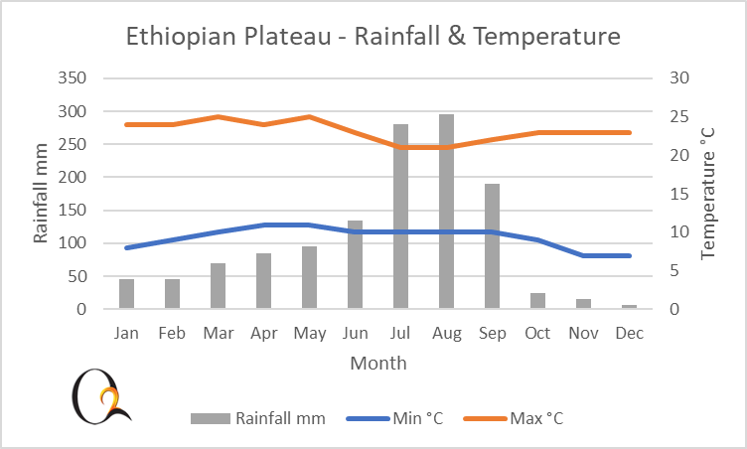
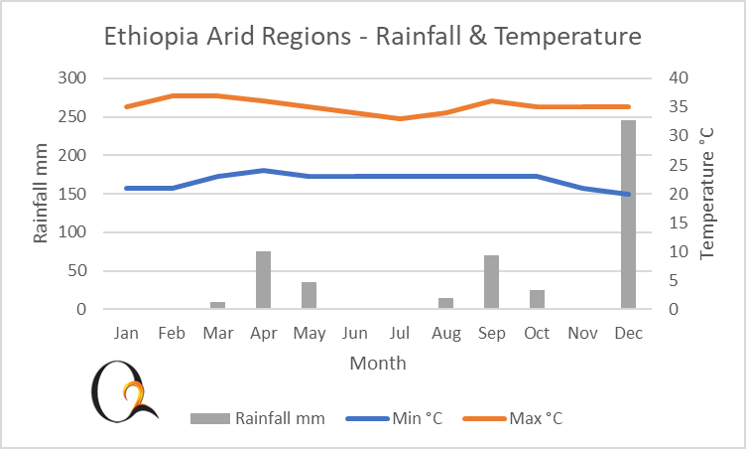
As Ethiopia is generally hot, the cooler period, which extends from November to February, is the best time to visit Ethiopia. This is also the driest period. The low-lying arid areas, however, still remain very hot during the day, but it does cool off at night.
The highlands experience heavy rains in July and August, and the semi-arid areas very hot days in April and May, making these the most unpleasant times to visit the areas. The Danakil Depression is oppressively hot throughout the year, with December to February being slightly cooler.
The green season of September and October is the best time for highland wildlife. Although the heavy rains still fall in September, the rains cause very little disruption, and you have the added advantage of finding the landscape lusher and fewer tourists.
Which Places Should I Include in My Visit?
This really depends on why you chose Ethiopia for your travels.
If you want to experience the ancient cultures of Ethiopia, a visit to the Omo Valley must be included in your itinerary. Combine this Omo Valley with Bahir Dar and Lake Tana, whose shores and islands are dotted with ancient churches and monasteries, and you have a cultural experience that is second to none.
If you want to have a more active holiday, walking and trekking is the way to go.
The Simien Mountains National Park and the Gheralta Mountains are the most popular areas to walk or trek. Bird watching in the Bale Mountains also involves less strenuous walking.
If history, architecture, and religious tourism is your bent, the northern circuit is your destination. The circuit includes three northern cities, including Lalibela, which is home to the astonishing rock-hewn churches. Visit on a Sunday when you will see them not just as ancient monuments, but as living, thriving places of worship. Aksum, the former capital of the Aksumite Kingdom, is the heart of Ethiopian Orthodox Christianity today, as it claims to be the final resting place of the Ark of the Covenant. There are beautiful 17th-century castles, palaces, and churches in Gondar, which is also the gateway to the nearby Simien Mountains.
How Long Should I Visit Ethiopia?
Ethiopia is not a hit and run destination. While you can get a taste of Ethiopia in five days, the true sense of this unusual country requires quite a bit more time. It is a country where time has stood still, or at least moved at a slower pace, and that is exactly what we suggest you do. Allow enough time to savour the sights, sounds, and culture, especially if you are combining the north and south of the country.
What is the Weather Like in Ethiopia?

Rain storm in Ethiopia
The altitude, which varies from -125 to 4563 m, plays a major role in Ethiopia’s climate. The arid lowlands are hot, while the highlands are cool. The temperatures in any particular region are similar throughout the year, as Ethiopia lies just above the equator.
The Ethiopian Plateau is generally temperate. Its rainy season is from June to September, when the south-west monsoon drops heavy rain on the area. This is also true of the south-west mountainsides, which experience a similar rainfall pattern. November to February is the dry period, and between March to May, scattered thundershowers in the afternoon can be experienced. With rainfall ranging between 1000 and 2200 mm, this area is very wet.
The Ethiopian Plateau is surrounded by semi-arid to arid areas, with the exception being the south-west slopes. Rainfall in these areas drops below 800 mm per annum. The choice of when to visit this region is complicated by two factors: the period from October to mid-May is extremely hot, with temperatures reaching the lower 40°s, April and May being the hottest months, and the period from mid-May to September being the rainy season. The Baro and Sobat river basins fall in this region, and they are marshy and somewhat inhospitable.
The south-east of the country experiences two rainy seasons, the heavier of the two in the period March to May, and the other in October and November. In some regions, the rains in October and November stop, causing drought.
The Lake Turkana region in the far south is best visited from June to August when it is cooler, though only slightly. This region, technically, has two rainy periods, namely March to May and October and November, although these rains are highly irregular. The heat is almost unbearable throughout the year.
The Danakil Depression is known as the hottest place on earth on average. The extreme heat caused the settlement at Dallol to be abandoned.
Do I Need a Visa to Travel to Ethiopia?
There are a large number of nationalities that are eligible for the Ethiopian visa on arrival. Please check with your travel agent.
The Ethiopian Tourist eVISA was launched by the Main Department for Immigration and Nationality Affairs in Ethiopia in June 2017. It is possible to obtain an eVisa before entering the country. Normal tourist visas are valid for between 30 and 90 days.
What are the Health Requirements for Travelling to Ethiopia?
Malaria is a risk in Ethiopia. We suggest that you consult your doctor as to what anti-malaria medication to take, as we strongly recommend that you do so. To minimise the risk of contracting malaria, wear long trousers and cover your arms in the evening, and apply mosquito repellent.
Some vaccines are recommended for Ethiopia. The World Health Organisation recommends the following vaccinations for Botswana: hepatitis A and B, rabies, meningitis, polio, measles, mumps and rubella, Tdap (tetanus, diphtheria, and pertussis), chickenpox, shingles, pneumonia, and influenza. Yellow fever is required if coming from an endemic country.
How Can I Travel Around in Ethiopia?
The majority of travellers take one of three approaches to exploring the “big four” cities of the northern circuit. The first, and less strenuous, approach is to fly between the aforementioned stops, exploring the towns, and sometimes arranging day excursions to nearby places of interest. One could, in theory, see the best of the northern circuit over five days, since flights generally take only an hour or so, leaving one with plenty of time to explore in between.
A more demanding option is to drive around the historical circuit in a rented 4×4 with a driver and(or) guide, or – tougher still – to do the whole circuit using buses and other public transport. The disadvantage of road travel is that it is time-consuming and sometimes exhausting – recent improvements notwithstanding. A realistic minimum of 12–14 days is required to cover this circuit by road, and three weeks or longer would be better, especially if you are using public transport.
Most of the rest of Ethiopia would be best explored with a 4×4 with a driver/guide.
TOP TOURIST ATTRACTIONS
Northern Circuit

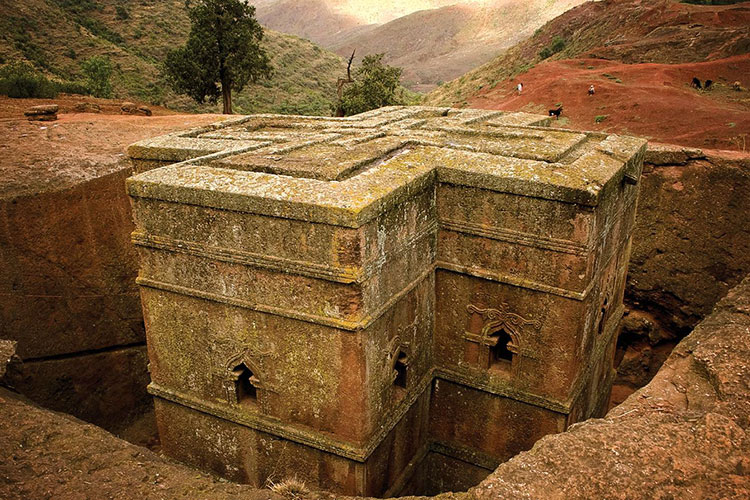
Carved out of one piece of rock – church in Lalibela
Ethiopia’s historical circuit has long been a draw for history buffs, archaeology fans, and religious pilgrims. The well-defined “historical circuit” through northern Ethiopia is visited by 90% of travellers to Ethiopia.
The historical circuit takes place in four northern cities. The first is the Bahir Dar, a modern, bustling commercial centre set on the southern shore of Lake Tana. Here, a visitor can experience a traditional daily market, enjoy the rich birdlife, and visit the source of the Blue Nile, the many medieval monasteries dotted around the islands and peninsulas of Lake Tana, as well as the Blue Nile Falls. That is, on the increasingly rare occasions when the Nile’s water has not been diverted to fuel a neighbouring hydro-electric generator.
To the north is Gondar, which has been Ethiopia’s capital for almost 300 years from 1635, and today, it is noted for its impressive 16th-century castles and the spectacular Church of Debre Berhan Selassie. Use Gondar as a base to experience the Simien Mountains National Park. It is in the Simien Mountains National Park where the largest concentrations of Gelada Baboons and Walia Ibex can be found. Traditionally, this area was only accessible to trekkers and hikers, but since then, a rough road has been constructed, making access by 4×4 possible.
Axum, the capital of the Axumite Empire, which dominated the region for about 1000 years, is best known for the giant engraved obelisks that tower over the north-east of the town. These, along with palace ruins, inscribed tablets, and catacombs offer a look into the colourful history. The nearby Yeha Temple, estimated to have been constructed 2500 years ago; the church of Tsion Maryam, where Ethiopians claim is the last resting place of the Ark of the Covenant; and the Monastery of Debre Damo are just a few other highlights.
The medieval capital of Lalibela, secreted away in the mountains of Wollo is home to the eighth wonder of the ancient world, a complex of a dozen rock-hewn churches. These treasures are now serviced by daily buses and flights. Lalibela’s 11 churches are arranged in four groups, clustered for the most part within walking distance of each other on both sides of a stream known as the River Jordan. Some of the more remote churches can be reached with mules and a little hiking, only to provide stunning panoramas over the surrounding landscape. The northern group is considered the most impressive in terms of scale and detail.
Some of the Churches:
- Biete Medhane Alem is home to the Lalibela Cross and is known as “The House of the Saviour of the World”. It is believed that one can be healed by touching or brushing against the cross.
- Biete Maryam – The oldest of the Lalibela churches is said to be a replica of the tombs of Adam and Christ. The interior is decorated with superb frescoes across its pillars, arches, and ceilings.
- Biete Golgotha Mikael – Distinctive for the seven reliefs of saints around its outer walls, Biete Golgotha Mikael is said to be the final resting place of King Lalibela.
- Church of Saint George – The single most impressive church here is also the best preserved. This 15 m tower was built in the shape of a cruciform cross. Completely distinct from the other churches, the Church of Saint George sits in a deep pit and truly showcases the mastery of the builders.
Besides being an active shrine to a Christian civilisation that pre-dates its northern European equivalent by centuries, Lalibela also offers visits to the Axumite cave church of Yemrehanna Kristos, the isolated monasteries and churches around Bilbilla, the remote montane retreat of Asheton Maryam.
Omo Valley

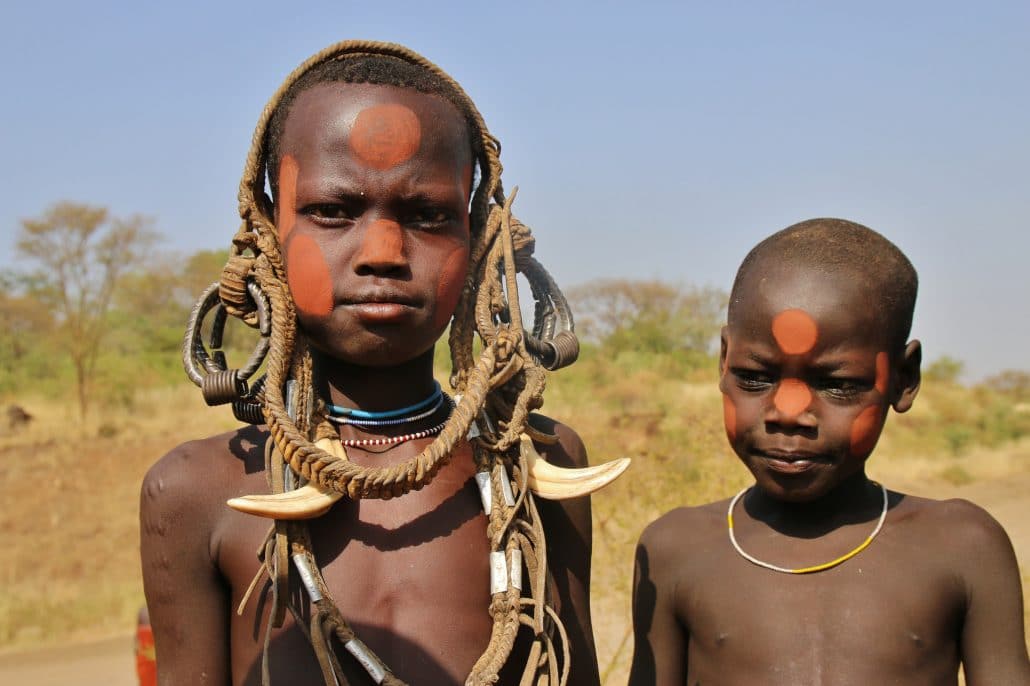
One of the tribes of the Omo Valley
Ethiopia’s Omo Valley is comprised of some 200,000 people, in eight tribes, who continue to live as agriculturalists and pastoralists. Each tribe in the Omo Valley is unique. The Mursi women have heavy lip plates, the Surma and Kara boys paint masks on their faces, the Hamer tribeswomen use ocre and butter to achieve their unique hairstyle, and their young men partake in their bull-jumping ritual to mark their coming of age.
We suggest that you go beyond the standard tourist fare. A cultural tour in the highland takes you to an area where life carries on the way it has done for centuries – in the weekly markets, the well-tended farms, and the peaceful hillside villages herding sheep and goats. Book a night in a community tukul in Konso or Dorze (a traditional thatched hut located within a village), where members of the community will look after you.
The more cattle you have, the more status you achieve in the tribe. As these tribes still practice the dowry system, the bigger the dowry (more head of cattle), the more important the woman. This results in women being prized for their ability to attract a large dowry.
Experience the Ethiopian and Eritrean restaurants, which serve the wot and injera (a slightly spongy, sourdough “pancake”), and wash it down with honey, wine, and coffee. Enjoy the local music of Ethio-jazz and reggae. Did you know that Emperor Haile Selassie I, also known as Prince Ras Tafari, is where the Rastafarian movement got its name from? He was regarded as the second coming of God, and Ethiopia, the promised land.
Trekking
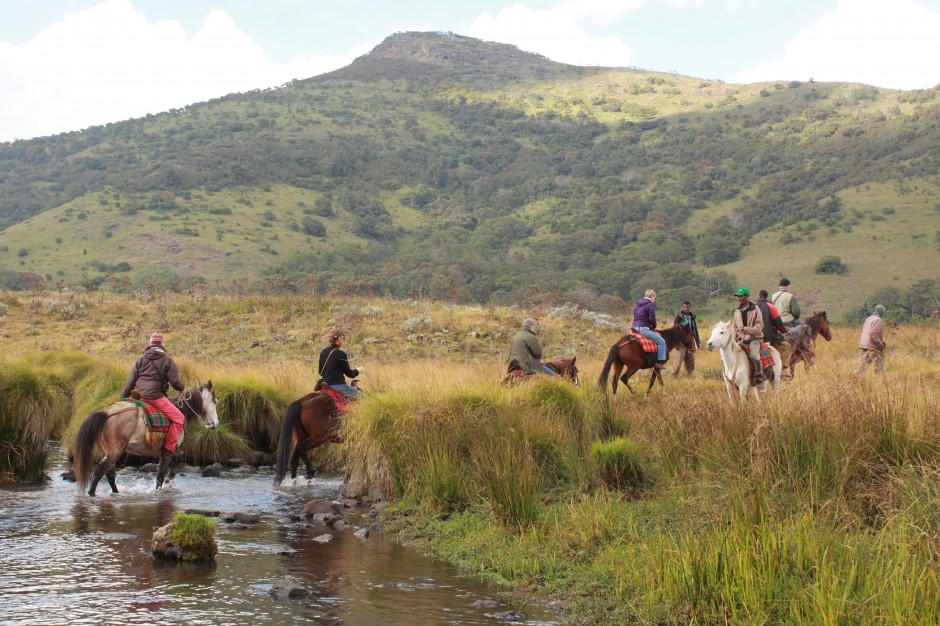
If you want to trek away from the crowds, Ethiopia is the place to do this. As the treks in Ethiopia, mainly in the Simien Mountain and Gheralta Mountain regions, are off the beaten track, they offer the opportunity to leisurely learn the culture from your guide and the encounters with the communities you pass through.
Trekking is not only about culture. Wildlife in the form of the Gelada and the rare Ethiopian Wolf may be encountered. Accommodation is in the form of locally owned lodges, which are mainly comfortable, if not luxurious, and there are also campsites for the adventurous.
The Highlands

Restaurant overlooking the highlands
Ethiopia’s highest peak, Ras Dejen, at 4563 m, is found in the Simien Mountains National Park and can only be explored by trekking. The enormous Baobabs of the Tekeze Valley can be visited on the way out of the park.
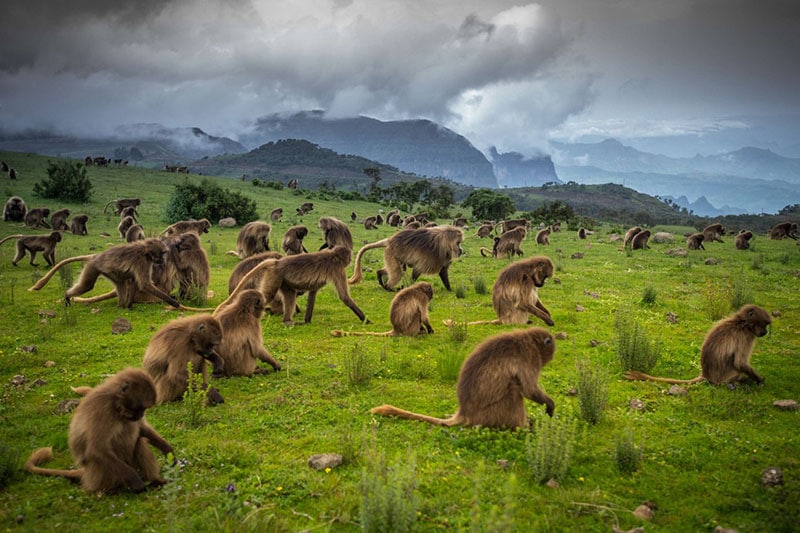
While the Simien Mountains may be the most famous mountain landscape in Ethiopia, to the south, the Bale Mountains National Park is fast becoming a favourite place to see the gelada “baboons”, Ethiopian wolves, and mountain nyala. There is also a small population of black-maned lions. You do not have to be a hardcore hiker to enjoy the scenery and wildlife. Day trips are possible, and a handful of new lodges offer a lot of comfort. The Bale Mountains National Park sports 280 species of birds and a quarter of the country’s endemic wildlife species.
The Galada’s are endemic to the high altitudes of the Ethiopian Highlands where they eat grass. They are the last surviving examples of these primates. The Gelada are not scared of humans and often cluster in large groups near tourists.
Festivals

Colourful robes worn for a festival
As mentioned above, Ethiopia is known for its festivals and fasting. Every Wednesday and Friday, the Christians fast, as well as 55 days leading up to Easter. During these fasting periods, they prepare only vegan or vegetarian meals.
Worth mentioning is the Timkat Festival, unique to Ethiopia, which is celebrated on 19 January. This festival celebrates Jesus’s baptism in the Jordan River. Mass baptisms are performed on this day, with the most popular places being Lalibela, Addis Ababa, and Gondar.
Lake Tana

Blue Nile Falls near Lake Tana
Lake Tana is the largest lake in Ethiopia. Basically heart-shaped, its shores and islands are home to ancient monasteries and churches. It is also well-known for its Colobus Monkeys, hippos, porcupines, rock pythons, hyenas, and abundant birdlife.
Awash National Park

Waterfall in Awash National Park
Awash National Park, with a dormant volcano at its centre, provides a habitat for over 400 species of native birds, including ostriches. A boat trip on the Awash River will reward you with the sightings of crocodiles and many antelope species.
Nechisar National Park

Large crocodiles in Nechisar National Park
Nechisar, in south-west Ethiopia, is one of the country’s least-visited national parks. Its terrain includes the Rift Valley escarpment, swamps, and forests. Herds of zebra and gazelle graze the grasslands, but sadly, the larger mammals are no longer present. To the south is Lake Chamo, and a patch of the shore is known as the “Crocodile Market”, where at times, hundreds of Nile Crocodiles can be observed. The rare Nechisar nightjar is of interest to the twitchers and bird lovers alike.
Yabelo Wildlife Sanctuary

Prince Ruspolis Turaco- one of the endemics found in the sanctuary
Yabelo Wildlife Sanctuary, originally meant to protect the hartebeest, which has since been poached out, is now best-known for its incredible birdlife, with almost 200 known species, including the rare Prince Ruspoli’s turaco.
Bird Watching in Ethiopia

Abyssinian Ground Hornbill- endemic to Ethiopia
Ethiopia is one of the most rewarding countries in Africa for bird watching. With over 800 recorded species, including 23 endemics, The Bale Mountains, Awassa Lake, The Sanetti Plateau, and Abijatta-Shalla National Park offer sightings of pygmy goose, grey kestrel, and African firefinch. While not a bird, the Harenna Forest is the best place in the country to see the Ethiopian wolf.
The Danakil Depression

Danakil Depression – one of the hottest places on earth
The Danakil Depression is located in the north-east of Ethiopia in the Tigrain Highlands. It has been formally noted as one of the driest and hottest places on earth, having an average temperature of thirty-five degrees centigrade. It is an astonishing area of geographical elegance, and a place occupied by active volcanoes, a lava lake, salted basins, lunar landscapes, and hot springs. It is the second-lowest place in the world, and the lowest place in Africa.
White-Eared Kob Migration

About 1 million White-Eared Kob migrate every year
White-eared Kobs are found in the Gambella Boma ecosystem. One of the most ecologically diverse in Africa, it includes forests and the floodplains of the Baro, Alwero, Gilo, Pibor, and Akobo rivers. The system is located on the transition zone from the East African ecological zone to the Central African ecological zone.
Eastern Ethiopia – A Short Synopsis

Gateway to the walled city of Harar
This covers parts of Ethiopia lying to the east of the capital. Its highlights include the wetlands around the Akaki River; the air-force town of Bishoftu (Debre Zeyit) with its attendant crater lakes; a mountaintop monastery at Zikwala; Awash National Park; the walled city of Harar, spiritual home of Ethiopia’s large Muslim community and home to the Hyena Men; as well as its less inspiring modern twin city of Dire Dawa.
Southern Ethiopia – Short Synopsis

Adadi Maryam church – one of the south’s many treasures
This is definitely the road less travelled. Here, you will find the Bale National Park, which is the best part of Ethiopia for viewing endemic wildlife, the majestic setting of Nechisar National Park and the Omo Valley. Routes to the south include:
- The route south from Addis Ababa to Butajira and Hosaina via Melka Kunture Prehistoric Site, the rock-hewn Church of Adadi Maryam, and the Tiya stelae field
- The route that follows the Rift Valley to the junction town of Shashemene and city of Hawassa
- The route that covers the wonderful trekking country and wildlife of the Bale Mountains National Park and environs
- The route that covers the road from Hawassa south to Moyale on the Kenyan border
- The route that concentrates on Arba Minch and Nechisar National Park, or on the cultural wonders of Konso and South Omo
To experience the history, culture and beauty of Ethiopia, contact Q2 Travel for a quote.
GENERAL INFO AND HISTORY
Offering ancient churches, modern cities, historical artefacts and relics, rugged mountains with breath-taking scenery, ancient cultures that persist till today, rare birds and mammals, and the hottest and driest place on earth, Ethiopia is the epitome of diversity. It is not a destination for the faint-hearted or fussy, but for those whose interests lie in culture, natural beauty, and religious history, there are few better places to visit.
History

Ethiopia Flag
Ethiopia is the oldest sovereign country in Africa. It has been in existence for over 2000 years, dating back to the first century BC when it was under the rule of the Aksumite Empire. During the fourth century, the Egyptians introduced Coptic Christianity, which became the official religion of the Aksumite kingdom. The introduction of Christianity as the state religion resulted in Christianity becoming integral to all aspects of national life. The Church has, for many centuries, been the repository of the cultural, political, and social life of the people. Today, it is the second oldest Christian country in the world.
Islam was first introduced into Ethiopia in the 7th century, with its influence growing ever since. First centred on the Red Sea coast, its influence moved inland to Shoa (Addis Ababa is the centre of this area) and Sidama in the south. The Muslims controlled the trade routes to the Red Sea by the 13th century. There were several clashes between Muslims and Christians in the 14th and 15th centuries, all won by the Christians.
Aided in the 16th century by the competition for the Red Sea trade between the Portuguese and the Ottoman Empire, the Muslims overcame the Christians. This was largely due to the exploits of Ahmad ibn Ibrahim al-Ghazi. Al-Ghazi defeated the Ethiopian Emperor’s Christian army, and the Emperor Lebna Dengel became a fugitive. It was in 1543, after many skirmishes and wars, that Lebna Dengel’s son, Emperor Galawdewos’s army, aided by the Portuguese, killed Ahmad in the battle. His troops, upon the loss of their leader, scattered and fled. The Christian empire was restored.
Sultan Menelik II, rose to power and lead Ethiopia through the Italian invasion in 1895. The Italians were defeated, and the country was to become an independent state. Around 1930, the Emperor Ras Tafari Makonnen put Haile Selassie in power. A second Italian invasion in 1935 resulted in the Italians successfully capturing Addis Ababa in 1936, which lead to the dethroning of Haile Selassie.
Of great significance was the formation of the Italian East Africa, which was comprised of three countries, namely Italian Somaliland, Eritrea, and Ethiopia. The Ethiopian resistance, assisted by the British, defeated the Italians again, restoring Haile Selassie to power in 1941.
Haile Selassie ruled the country until 1974 when a military coup, planned by General Terefi Benti, resulted in him being ousted. This led to the Ethiopia of today.
As the only country in Africa never to have been fully colonised, Ethiopia is a rare glimpse into a culture that has not been influenced by the west a lot. Like many African nations, it has its own languages, but it is the only African country that also has its own unique alphabet. Ethiopia also has its own time (the daily clock starts at 06:00, not midnight), and its own calendar, which is roughly seven years and nine months behind our own.
Food
The Ethiopian menu consists of a variety of vegetables and meat-based dishes, generally prepared as wot or thick stew. Consumption of pork is restricted due to the fact that most Ethiopians are either from the Orthodox Church, Judaism, or Islam.
Languages
There are about 83 languages, which are broadly organised into four prime groups, namely the Semitic, the Nilo-Saharan, Cushitic, and Omotic. The fact that the Ethiopian language consists of 200 dialects confirms Ethiopia as a multi-ethnic nation. Amharic, a semantic dialect, is also the official language of the nation spoken by twenty-seven million people. The second-largest language in the nation is the Oromo dialect.
Economy
Ethiopia’s economy is concentrated in the services and agriculture sectors. Since 2003, Ethiopia’s economy has been booming. In 2000, it was the third-poorest country in the world with over 50% living below the poverty line. Between 2000 and 2016, of the countries that have more than 10 million inhabitants, Ethiopia has the world’s third fastest-growing economy. During this period, the poverty rate fell to 31%.
Money
The Ethiopian Birr is the currency of Ethiopia. The United States dollar is widely accepted at tourist establishments, but for buying local goods, it is good to have the local currency. You will receive change from the locals only in the local currency.
Now that you know more about the history, culture, beautiful landscapes, and interesting people of Ethiopia, perhaps you are ready to plan your trip to this exciting country that is just waiting to be explored. You can contact Q2 Travel for more information and to start planning your holiday.
Latest Articles
- Seychelles eTravel PromoOctober 27, 2025 - 8:49 am
- Reunion eTravel PromoOctober 27, 2025 - 8:41 am
- New specials coming soonJune 3, 2025 - 1:34 pm
- African Safari Tours – Part 4 – Big 3 African Transfrontier ParksDecember 9, 2019 - 7:57 am
 African Safari Tours – Part 3 – Zimbabwe’s trio of safari must dos.November 18, 2019 - 7:07 am

